
 For expats
7 min
Building in Costa Rica from abroad: five roof decisions you make before you arrive
Most of what goes wrong with a tropical roof is decided in the first three site meetings — usually while the owner is still in another country.
Synthetic thatch roofing · Costa Rica
An English-language guide for people building in Costa Rica: what synthetic thatch is, what it costs to own over twenty years, and what the fire and wind documentation actually says.
20-year warranty
Documented, not asserted. One installation instead of five re-thatchings.
What this site is
If you are building a villa in Nosara, converting a beach club in Papagayo or planning a resort on the Pacific coast, you have probably already fallen for the image of a thatched roof — and then heard three worrying things about it from three different people.
This site answers those things in plain English: how synthetic thatch differs from natural palm, what it genuinely costs across a twenty-year hold, and what documentation your architect, your insurer and the fire review will ask for. Quotes and pricing are issued by palm.cr, the authorized distributor.
Compare the twoTwo ways in
A homeowner wants to know how it lives and what it costs to keep. A developer wants to know what it does to the model and to the insurance file. Start wherever you actually are.
Building or renovating a home in Costa Rica from abroad: what to decide early, and what to ask your architect for.
Hotels, beach clubs and amenity buildings: lifecycle cost, phasing, insurability and the fire file.
How a thatch roof is priced in Costa Rica, what moves the number, and the twenty-year comparison.
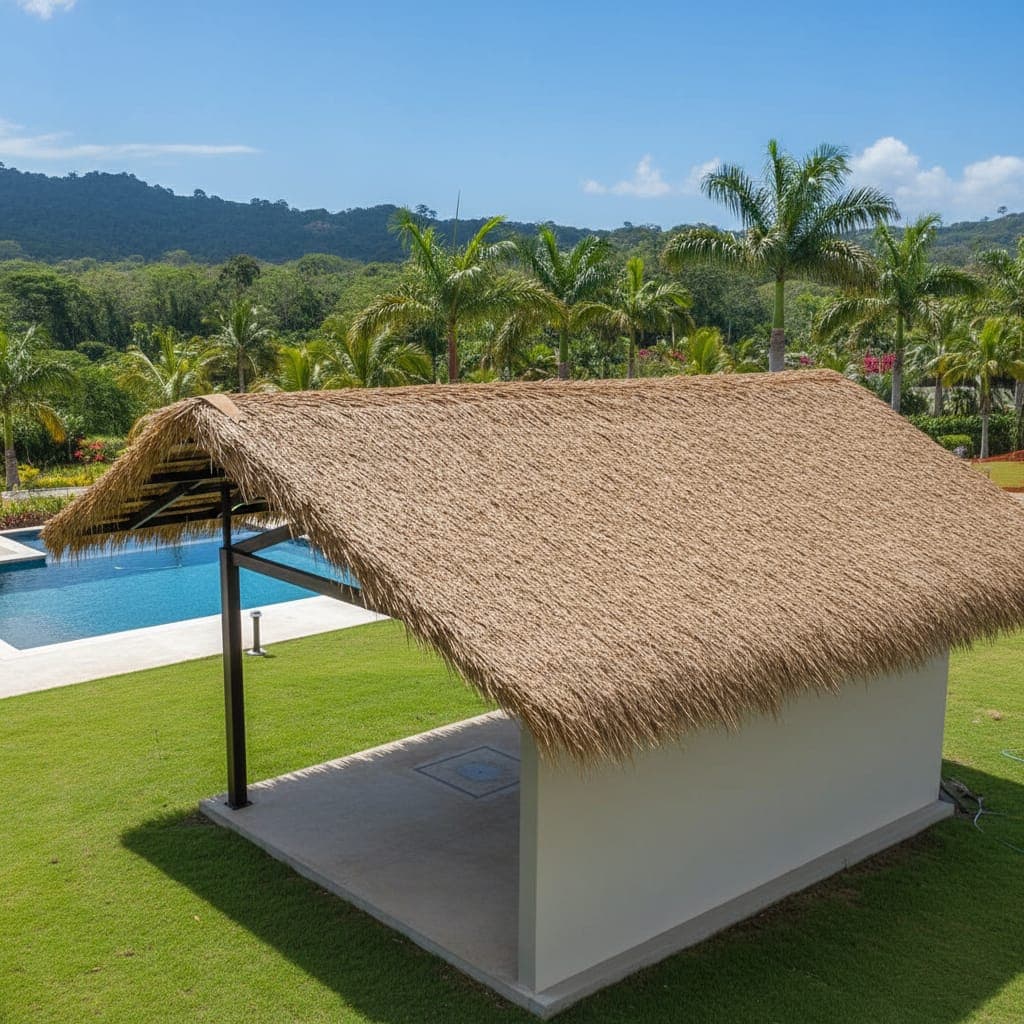
The panel is moulded and tone-mixed so a large roof does not read as a repeating pattern from below — which is the angle a palapa is actually looked at from, all day, from underneath.
Class A under ASTM E108, certified to 260 km/h wind and tested to 6,000 hours of UV exposure. Those are third-party test results, which is what an insurer and a plan reviewer are able to accept.
No re-thatching cycle, no fumigation season, no fibre in the pool filter, and no scaffolding across the deck in the middle of high season.
Why people switch
A vegetal roof in coastal Costa Rica is re-thatched every three to five years. Over a twenty-year hold that is four or five interventions, each with scaffolding, an unusable area and a bill that was never in the construction budget.
One installation, a twenty-year documented warranty, and a maintenance routine that amounts to clearing debris after storm season. For a house you occupy part of the year, that difference is the whole argument.
Before you commit
Synthetic thatch needs 18° or more to shed water between laps. A roofline drawn flatter than that for the rendering has to be redrawn, so ask for the pitch in degrees at the first sketch.
A rancho in the garden is an amenity you can add later. A thatched great room is a structural decision that sets spans and ceiling heights from the beginning.
If you are in the country part of the year, whatever you choose has to be maintainable by somebody else. That single constraint rules a lot of tropical materials out.
The fire and wind questions arrive from the broker, usually late, and usually once the roof is already up. It is far easier to have the documentation before then.
Built and standing
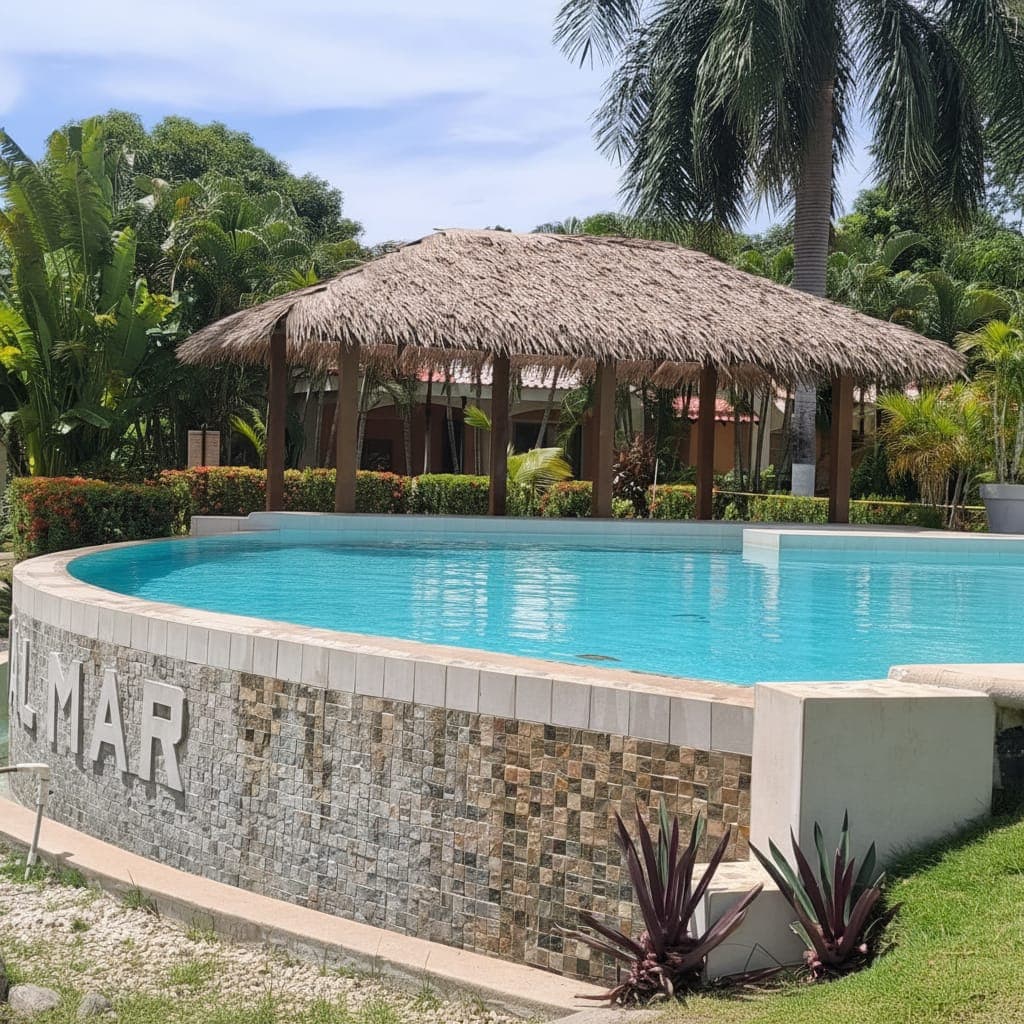
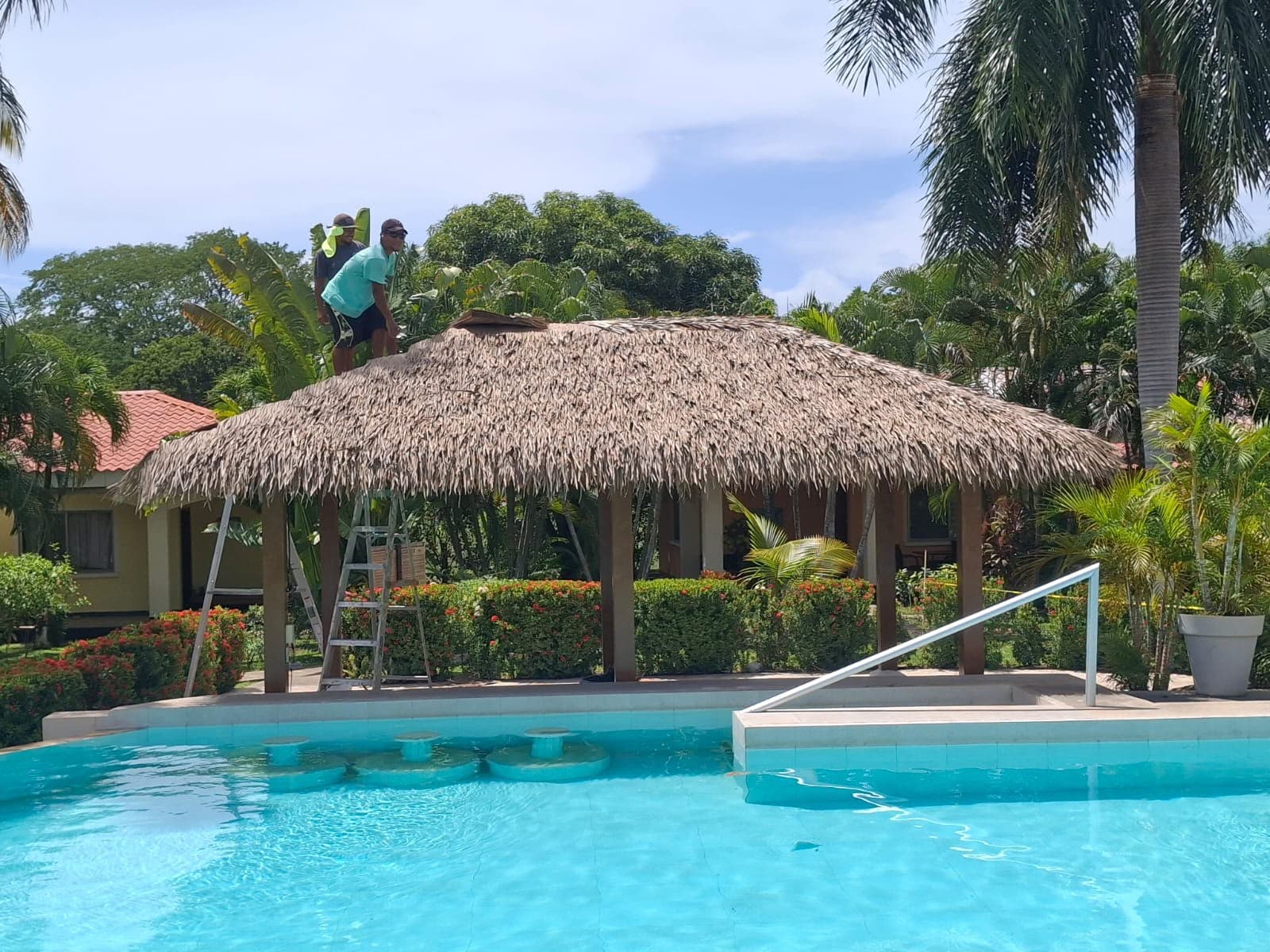
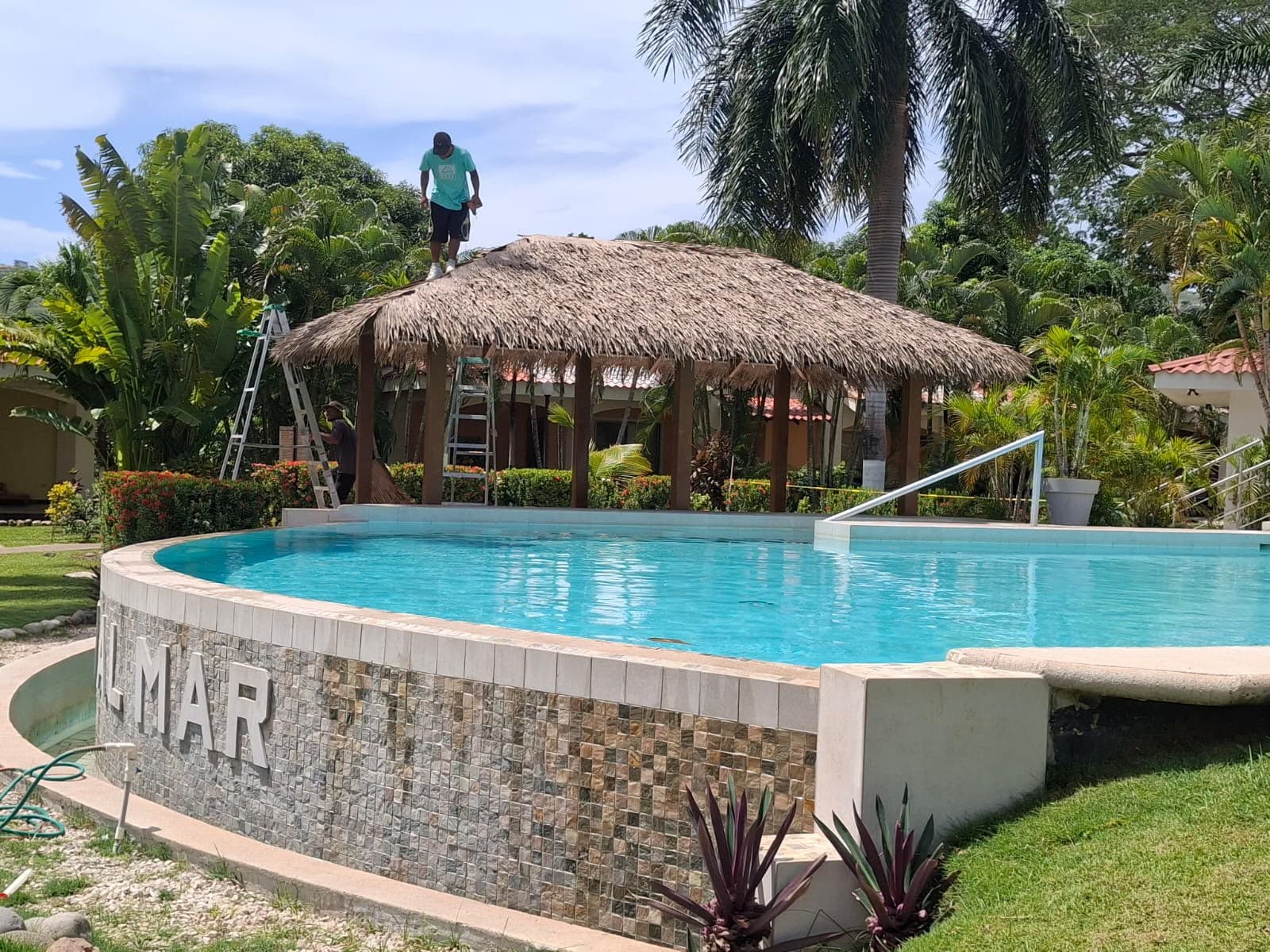
Resort pool decks, beach club houses, condominium social areas and private ranchos across Guanacaste, the Central Pacific and the Central Valley.
Residential tower
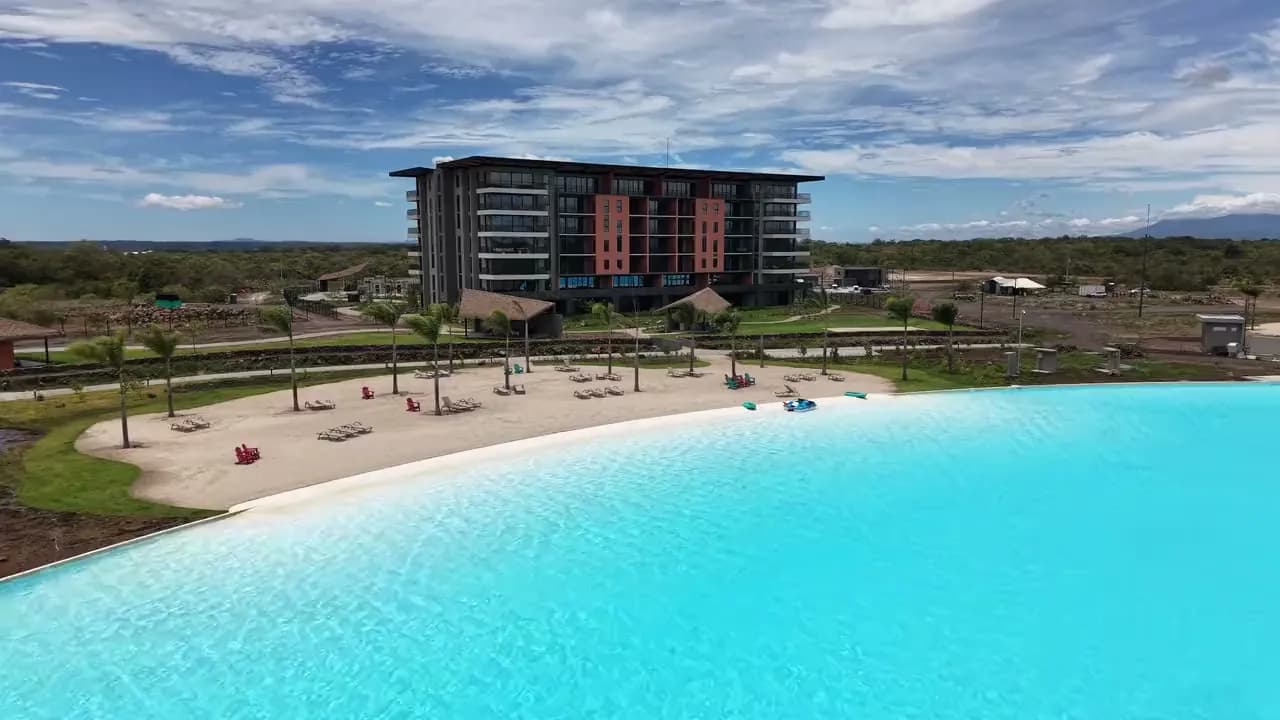
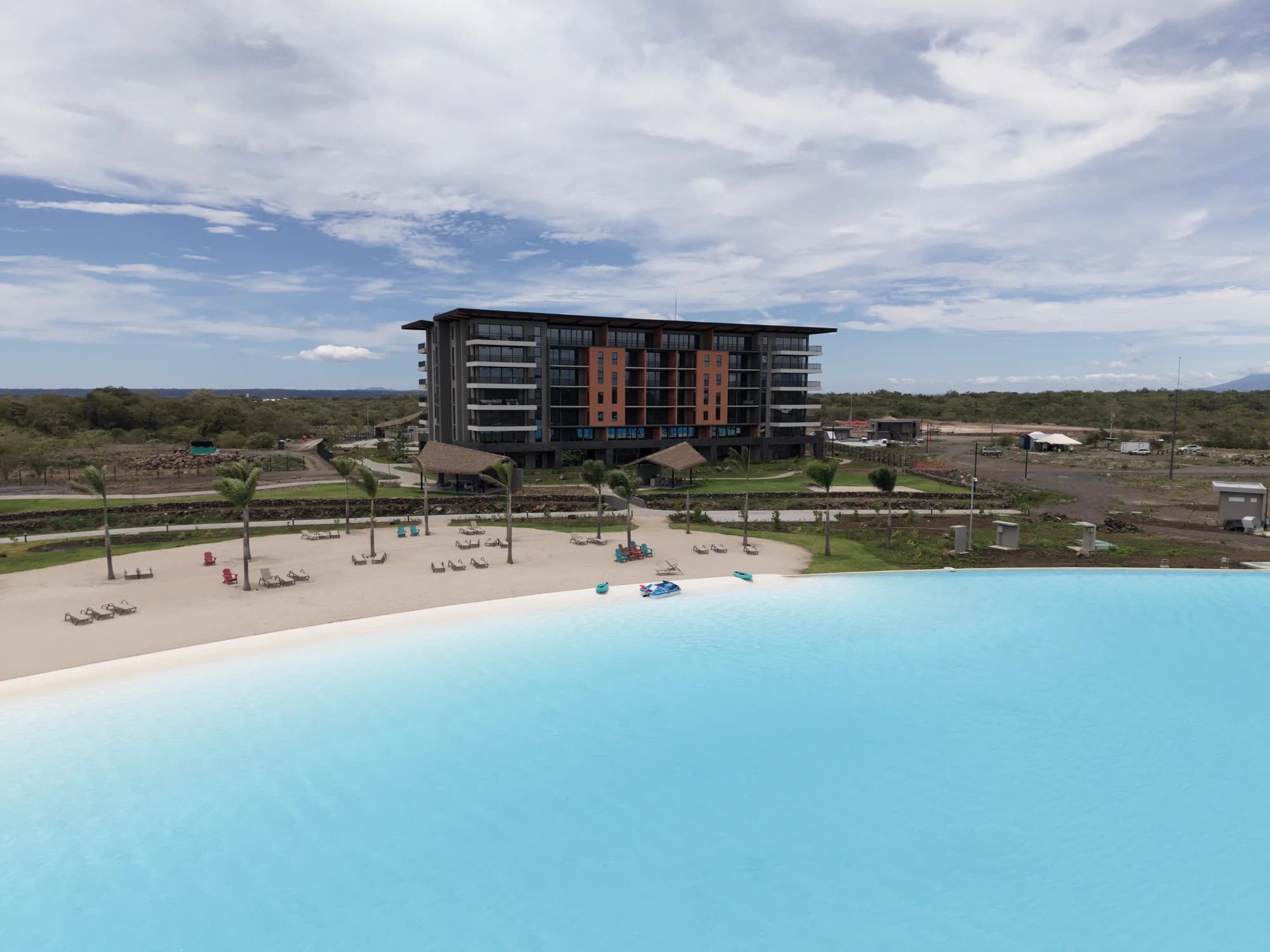
Social-area palapas at the foot of a residential tower in Guanacaste, facing the lagoon beach.
Residential tower
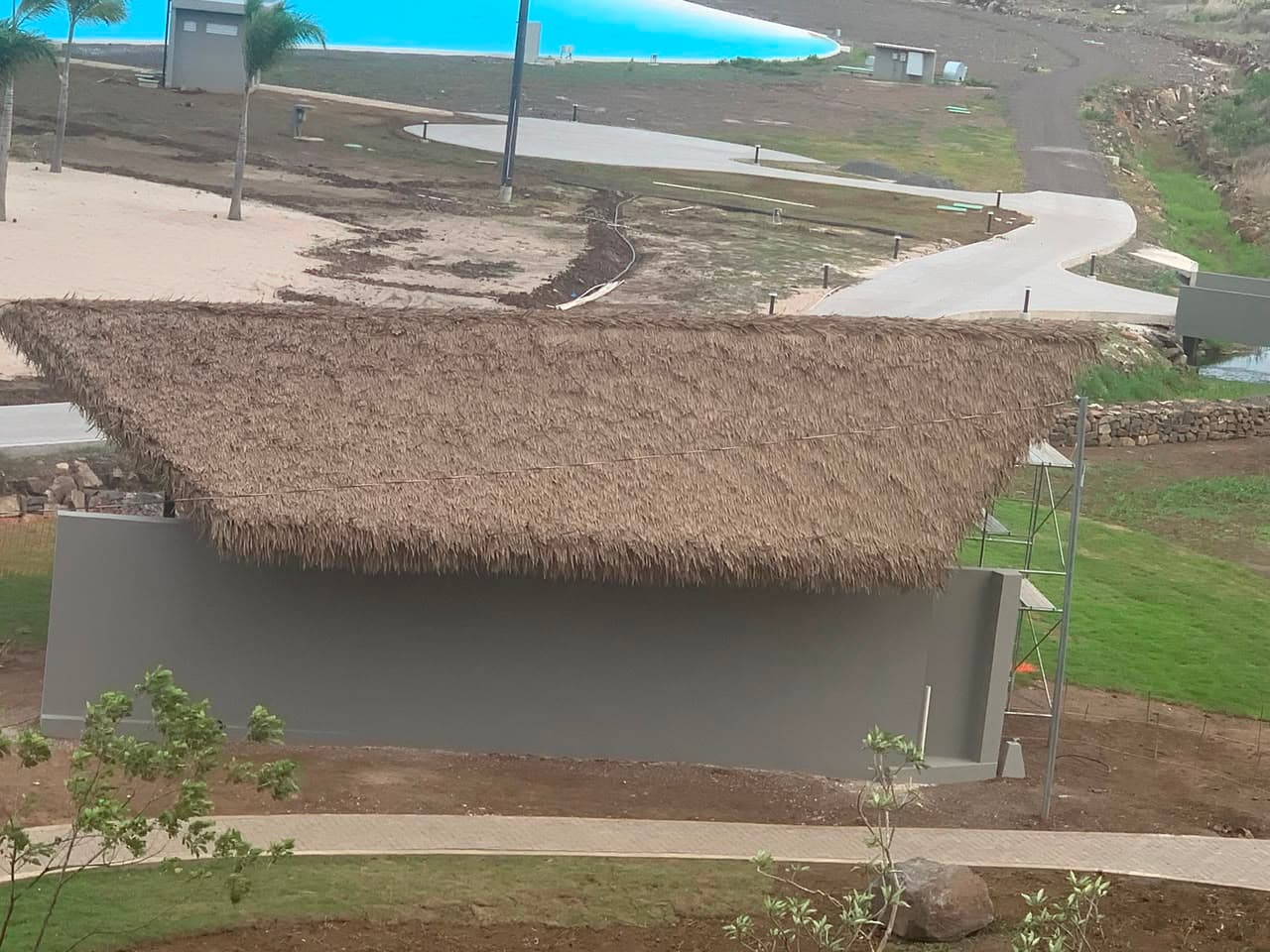
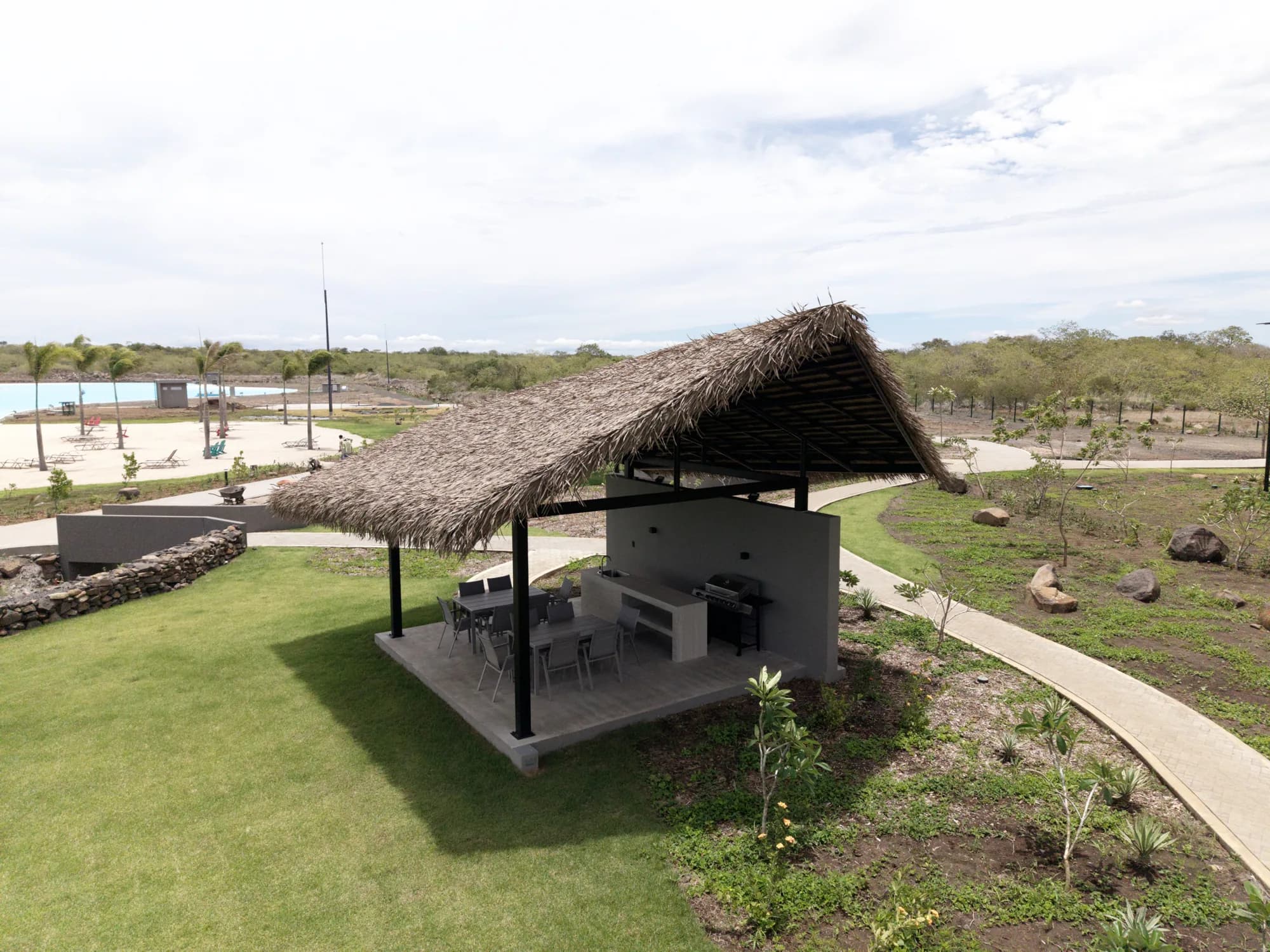
Covered social area looking onto the lagoon; a single-plane roof on a steel frame.
Residential tower
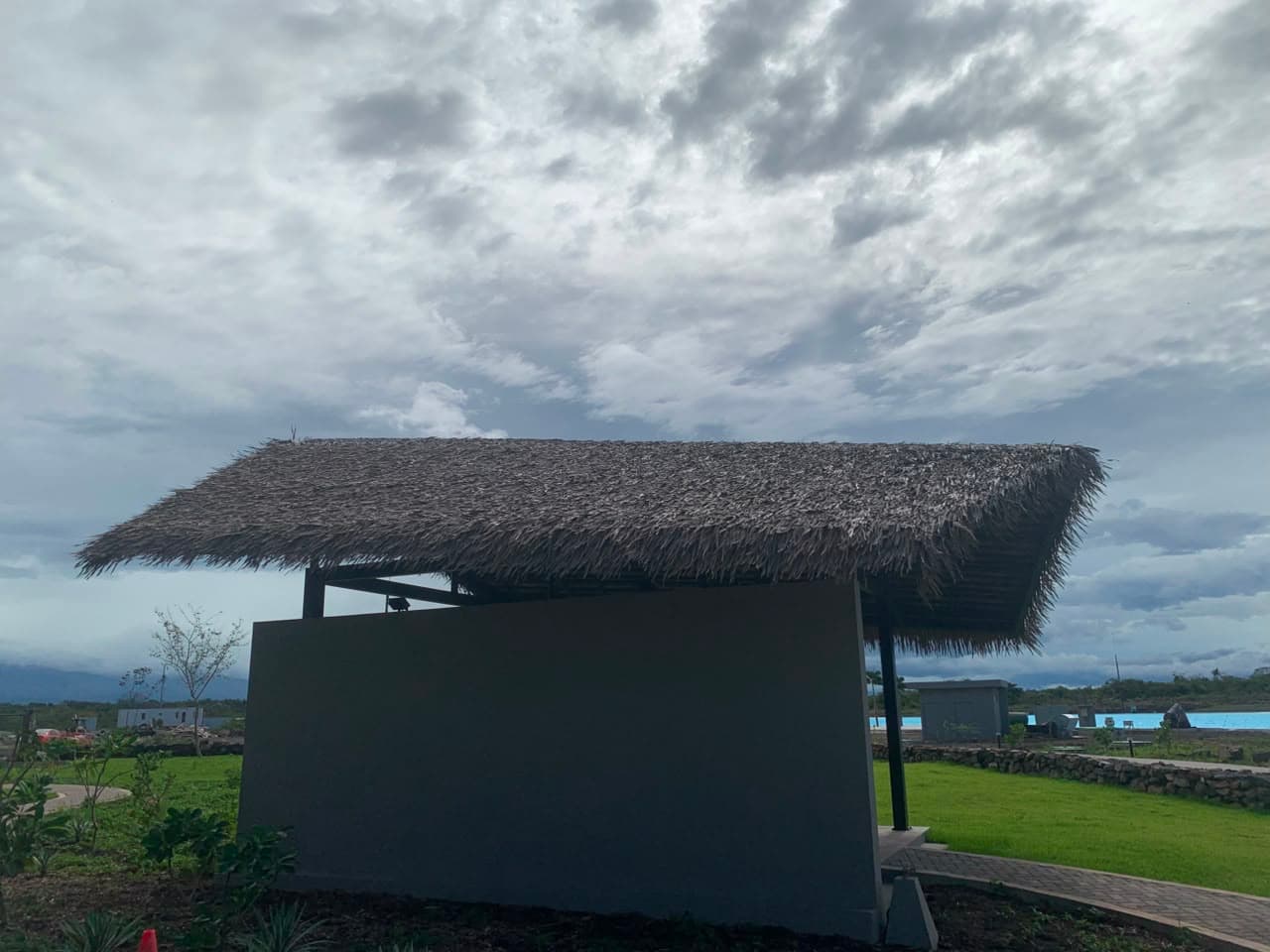
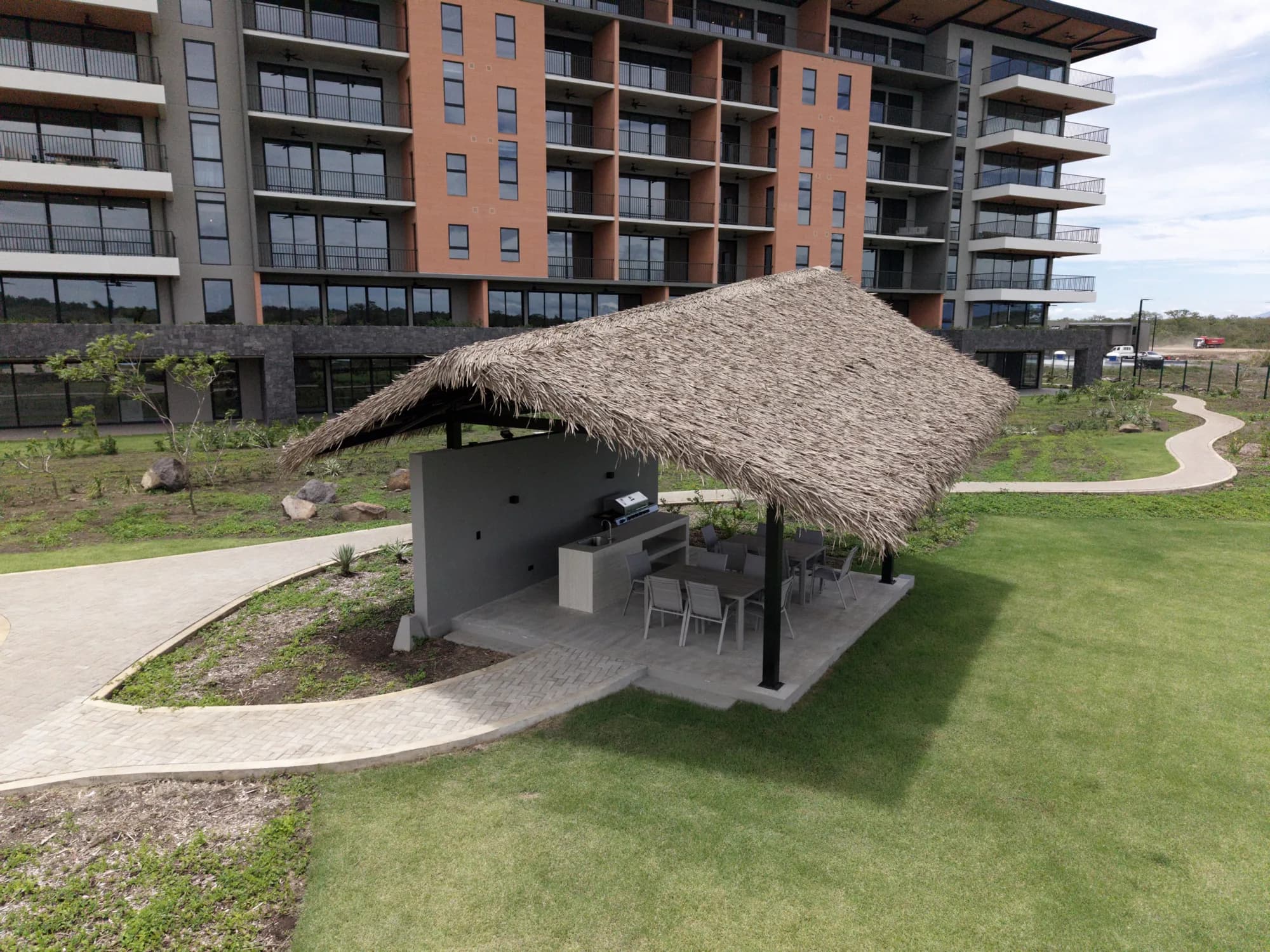
NIPA® synthetic thatch roof against the tower's volume, with a deep eave.
Resort
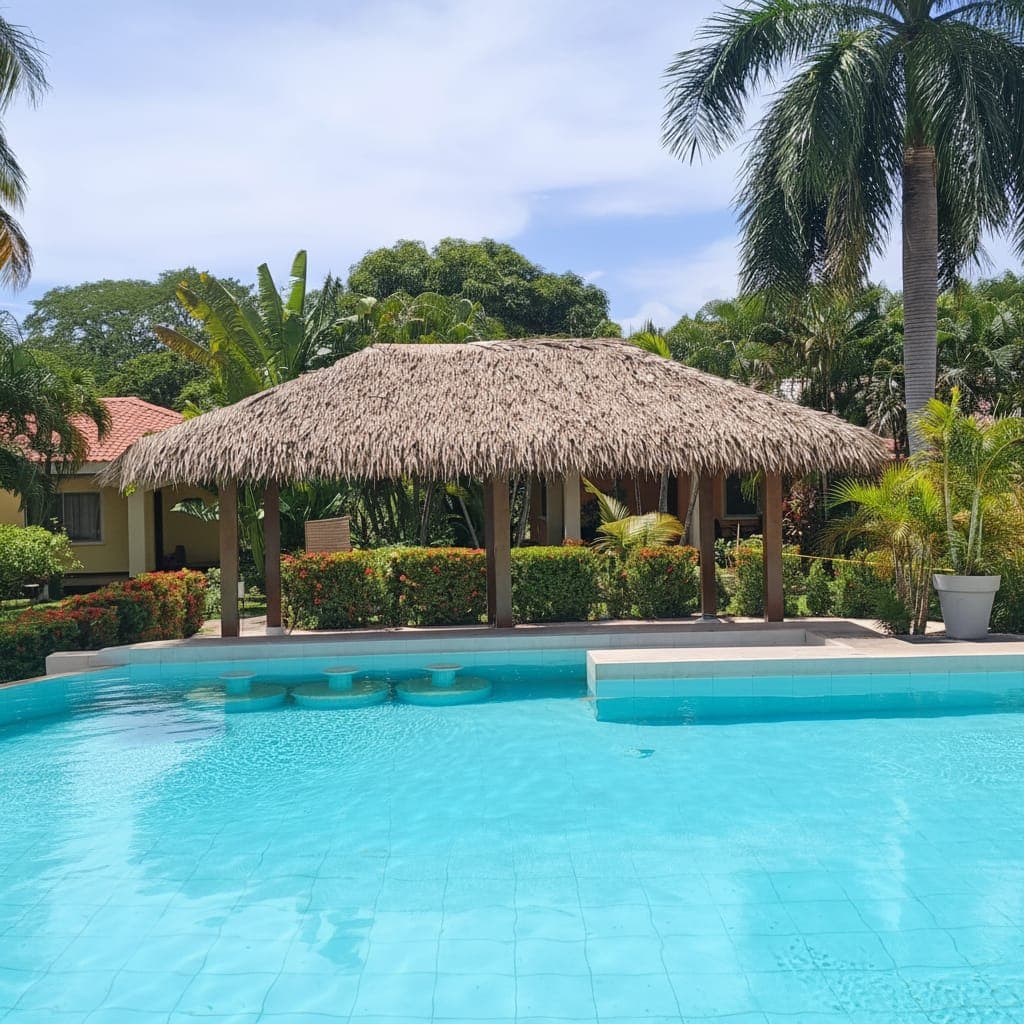
Shade over the pool area with long planes and a deep eave towards the deck.
The evidence
The number that never makes it into the construction budget
Nobody budgets for the fourth re-thatching. But across a twenty-year hold that is exactly what a natural fibre roof asks for — four or five times, each with scaffolding, a closed area and organic waste to remove. The comparison is never against one re-thatch; it is against all of them.
The evidence
Class A
ASTM E108
Roof covering fire test, highest severity level of external fire exposure.
260 km/h
Wind certification
Sized for an exposed Pacific coastline through storm season.
6,000 h
ASTM G155
Accelerated UV exposure — roughly twelve years of intense tropical sun.
20 years
Written warranty
Against rot, panel deterioration and sudden colour loss.
Talk to a person
Data sheet, test documentation, construction details and a physical panel sample. Answered in English, the same business day.
English-speaking desk
Project team · palm.cr
Documentation, samples and site visits
Or message us on WhatsApp
+506 6214-0226
Talk to someoneFirst questions
If your question is not here, the installation FAQ goes deeper, and you can always just ask us directly.
From below and from any normal viewing distance, yes — that is the design brief the panel is made to. The moulds and tones are mixed so a large plane does not repeat visibly. Up close and in your hand it is clearly a manufactured product, which is why we send physical samples rather than only photographs.
The panel is tested to 6,000 hours of accelerated UV exposure under ASTM G155, which corresponds to roughly twelve years of intense tropical sun, and it carries a twenty-year documented warranty. Colour change over time is gradual and even across the plane rather than patchy.
In practice the difference is small and is dominated by the design of the space — ceiling height, cross ventilation and the depth of the eave matter far more than the covering. An open-air rancho with a deep overhang stays comfortable under either material.
Usually yes. Replacing a failing natural roof on a sound structure is one of the most common jobs, and it is a good moment to check batten spacing and the condition of the timber before new material goes up.
Both routes exist. Your contractor's crew can be trained on site on the first roof plane, or a certified crew can execute the whole roof. Both are quoted by palm.cr.
The honest answer is that it depends on geometry, access, height and region, so a real number comes from your roof plan rather than from a web page. The cost guide explains exactly what moves the figure, and palm.cr issues the quote.
Journal
Building from abroad, resort economics and what a coastal roof actually endures.
For expats7 min
Most of what goes wrong with a tropical roof is decided in the first three site meetings — usually while the owner is still in another country.
For developers8 min
The capital cost of a palapa roof is the least interesting number in the model. Here is the line item that actually decides it.
 Climate
6 min
Four conditions decide how a tropical roof ages, and only one of them is rain. Understanding them is how you read a warranty properly.
English-language guide
Data sheet, test reports, construction details and a physical panel sample. Pricing and quotes are issued by palm.cr, the authorized NIPA® distributor in Costa Rica.